 Spreadsheet QC
CAP-01the number
Declared value, currency and compensation limits
At parcel submission you declare a value, choosing between a system-recommended figure and one of your own. It is a single field and it does two jobs: it is what the destination assesses, and it is the ceiling on what a claim can return.
That double duty is why the field is not a dial you can simply turn down. The number that makes a parcel cheaper to receive is the same number that makes a lost parcel cheaper to lose.
Compensation for forwarding orders is usually limited to the declared value.
Official LoongBuy Parcel Delivery Notes page, updated 14 April 2026 · checked 11 October 2026
The hatched part of each bar is outside any payout, whatever the review concludes and whatever the carrier admits.
What the operator says about choosing the figure
Three statements, all from pages that predate your order.
- DEC-01
You are the one responsible for it
The agreement puts confirming the declared value, item name, quantity and purpose on the user, along with any clearance materials the destination requires.
- DEC-02
Declare reasonably against actual value
Two ways to fill the field: take the figure the system proposes, or type one. The customs page asks for a reasonable number, measured against what the thing actually cost and against the destination's own rules.
- DEC-03
A false one has its own consequences
False declaration may result in penalties or seizure, and the risks of that are the recipient's. The same page notes that duties depend on inspection probability and local rules rather than on anything the platform controls.
- DEC-04
And it caps the claim
The delivery notes page lists a payout limited to the declared value among the situations that shape compensation. Nothing later in the process revises the figure upward.
The trade, stated plainly
There is a real tension here and pretending otherwise would be useless. Both directions cost something.
Declaring at value
Full ceiling
The claim can reach what the goods were worth. The destination assesses on the same figure, and the customs page is explicit that duty depends on declared value among other factors.
Declaring below value
Capped ceiling
The assessment is smaller and so is everything you can recover. A false declaration also carries its own exposure to penalties and seizure, which the agreement places on the user.
This guide does not tell you which to choose, because the right answer depends on the destination's rules and on what the parcel is worth to you. What it will say is that the choice is a single decision with two consequences, and that most people make it while thinking only about the first one.
The risks the operator names before you declare anything
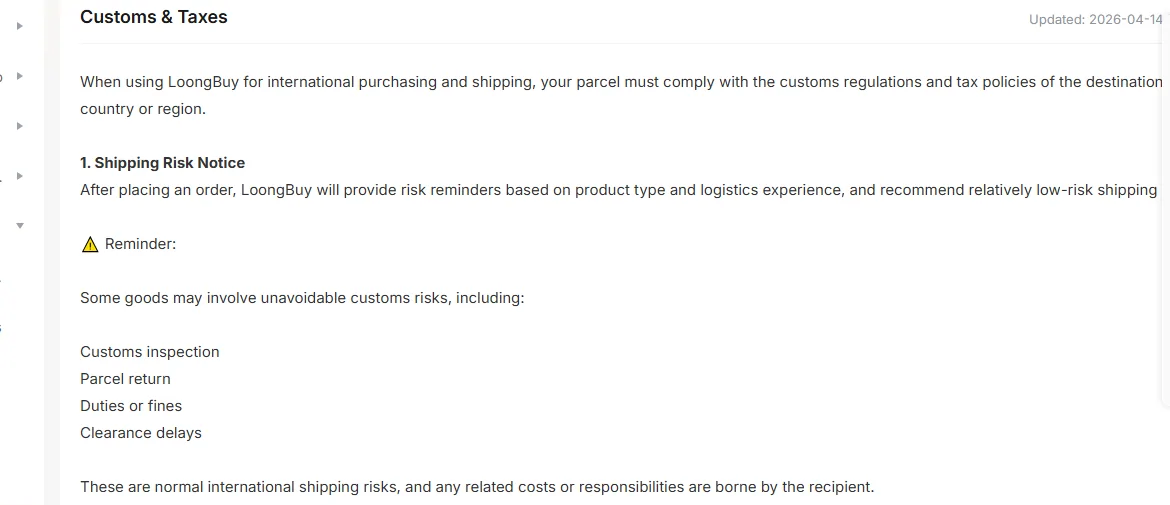
The customs page opens by listing what it calls unavoidable risks: inspection, parcel return, duties or fines, and clearance delays. It then states who carries the cost of them, and the answer is not the platform.
Read that paragraph as the frame around the declared-value field rather than as boilerplate. It is telling you in advance that several of the ways a parcel can cost you more are outside anyone's control and inside your account.
The rest of what the pages decline in advance
The currency gap inside the ceiling
The declared value is typed as one figure, in one currency. The money behind it leaves a bank account in another, after an automatic conversion the buyer never sees itemised. So the ceiling has two versions, the sum typed at declaration and the sum the bank settled, and the platform itself says the two can differ.
The platform's own terms for the debit
The Payment and Top Up page states that the platform converts automatically by settlement currency, that the debit can differ with exchange rate movement, bank fees and channel settlement rules, and that the bank's actual debit governs. The platform does not publish the conversion rate it uses; the fee rate is shown on the payment page.
Recorded figures over remembered ones
Reviews work from records. The declared value is stored by the system; what the purchase actually cost exists only as a line on a bank statement. Memory keeps a third version, usually a round number in the home currency, and it is the least reliable of the three. Any figure quoted in a complaint should be read from a record, not recalled.
A dated note of the actual debit
On the day of payment, copy the exact debit from the bank statement into a note of your own: amount, currency, date, and the fee rate the payment page showed. That statement line is the only copy of the charge you control, and the one figure you can produce later without asking anyone.
Policy reference checked 11 October 2026; layout revised 14 October 2026. The latest official site refresh was blocked. Confirm current terms in your LoongBuy account.